Web cookies (also called HTTP cookies, browser cookies, or simply cookies) are small pieces of data that websites store on your device (computer, phone, etc.) through your web browser. They are used to remember information about you and your interactions with the site.
Purpose of Cookies:
Session Management:
Keeping you logged in
Remembering items in a shopping cart
Saving language or theme preferences
Personalization:
Tailoring content or ads based on your previous activity
Tracking & Analytics:
Monitoring browsing behavior for analytics or marketing purposes
Types of Cookies:
Session Cookies:
Temporary; deleted when you close your browser
Used for things like keeping you logged in during a single session
Persistent Cookies:
Stored on your device until they expire or are manually deleted
Used for remembering login credentials, settings, etc.
First-Party Cookies:
Set by the website you're visiting directly
Third-Party Cookies:
Set by other domains (usually advertisers) embedded in the website
Commonly used for tracking across multiple sites
Authentication cookies are a special type of web cookie used to identify and verify a user after they log in to a website or web application.
What They Do:
Once you log in to a site, the server creates an authentication cookie and sends it to your browser. This cookie:
Proves to the website that you're logged in
Prevents you from having to log in again on every page you visit
Can persist across sessions if you select "Remember me"
What's Inside an Authentication Cookie?
Typically, it contains:
A unique session ID (not your actual password)
Optional metadata (e.g., expiration time, security flags)
Analytics cookies are cookies used to collect data about how visitors interact with a website. Their primary purpose is to help website owners understand and improve user experience by analyzing things like:
How users navigate the site
Which pages are most/least visited
How long users stay on each page
What device, browser, or location the user is from
What They Track:
Some examples of data analytics cookies may collect:
Page views and time spent on pages
Click paths (how users move from page to page)
Bounce rate (users who leave without interacting)
User demographics (location, language, device)
Referring websites (how users arrived at the site)
Here’s how you can disable cookies in common browsers:
1. Google Chrome
Open Chrome and click the three vertical dots in the top-right corner.
Go to Settings > Privacy and security > Cookies and other site data.
Choose your preferred option:
Block all cookies (not recommended, can break most websites).
Block third-party cookies (can block ads and tracking cookies).
2. Mozilla Firefox
Open Firefox and click the three horizontal lines in the top-right corner.
Go to Settings > Privacy & Security.
Under the Enhanced Tracking Protection section, choose Strict to block most cookies or Custom to manually choose which cookies to block.
3. Safari
Open Safari and click Safari in the top-left corner of the screen.
Go to Preferences > Privacy.
Check Block all cookies to stop all cookies, or select options to block third-party cookies.
4. Microsoft Edge
Open Edge and click the three horizontal dots in the top-right corner.
Go to Settings > Privacy, search, and services > Cookies and site permissions.
Select your cookie settings from there, including blocking all cookies or blocking third-party cookies.
5. On Mobile (iOS/Android)
For Safari on iOS: Go to Settings > Safari > Privacy & Security > Block All Cookies.
For Chrome on Android: Open the app, tap the three dots, go to Settings > Privacy and security > Cookies.
Be Aware:
Disabling cookies can make your online experience more difficult. Some websites may not load properly, or you may be logged out frequently. Also, certain features may not work as expected.
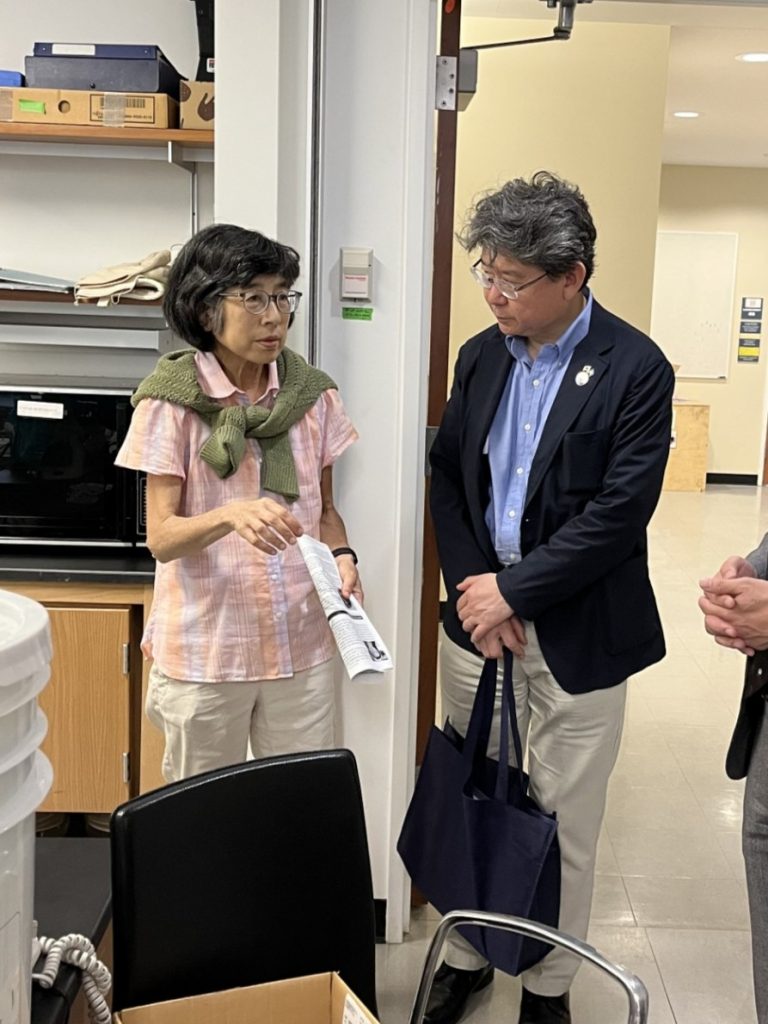
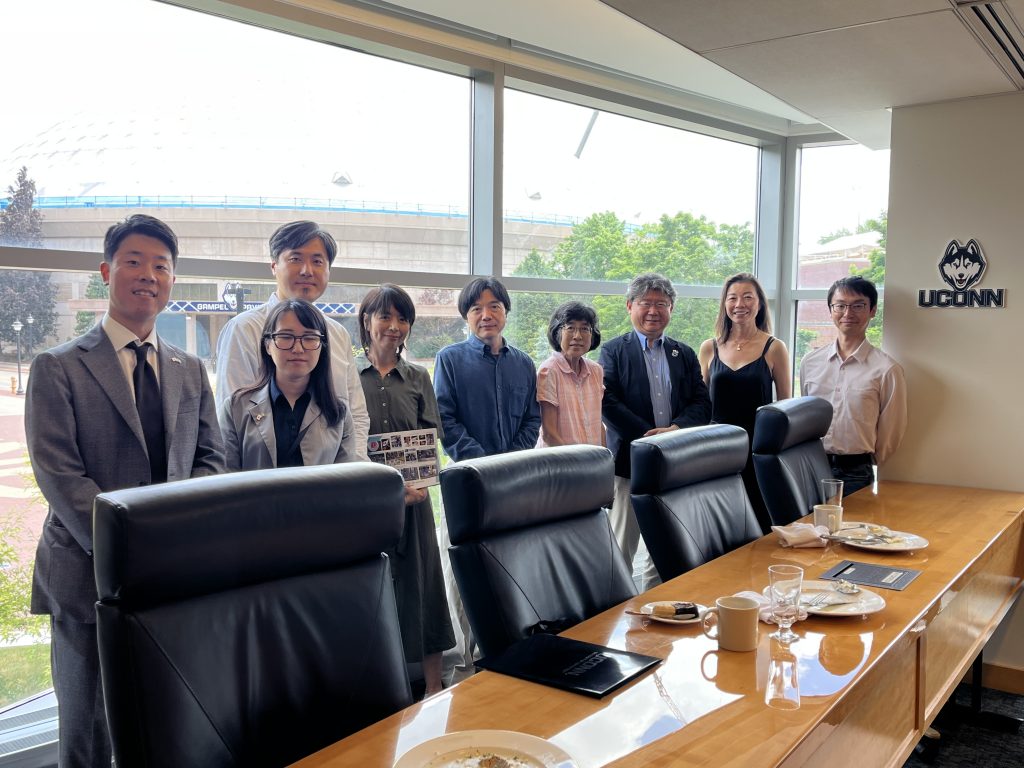
The Office of Global Affairs at the University of Connecticut was honored to welcome delegates from the Consulate General of Japan in Boston to the UConn Storrs campus last week. The visit included discussions on expanding research engagement between UConn and Japanese researchers, strengthening collaboration in quantum technology and innovation and entrepreneurship, and advancing J-NEXUS (Japan–New England Nexus for Innovation), a platform developed by the consulate to foster connections between New England and Japanese companies and researchers.
The delegation included Seiichiro Takahashi, Consul General of Japan in Boston; Hideo Takahashi, Vice Consul for Economic Affairs; and Yurie Karikomi, Researcher for Science and Technology.
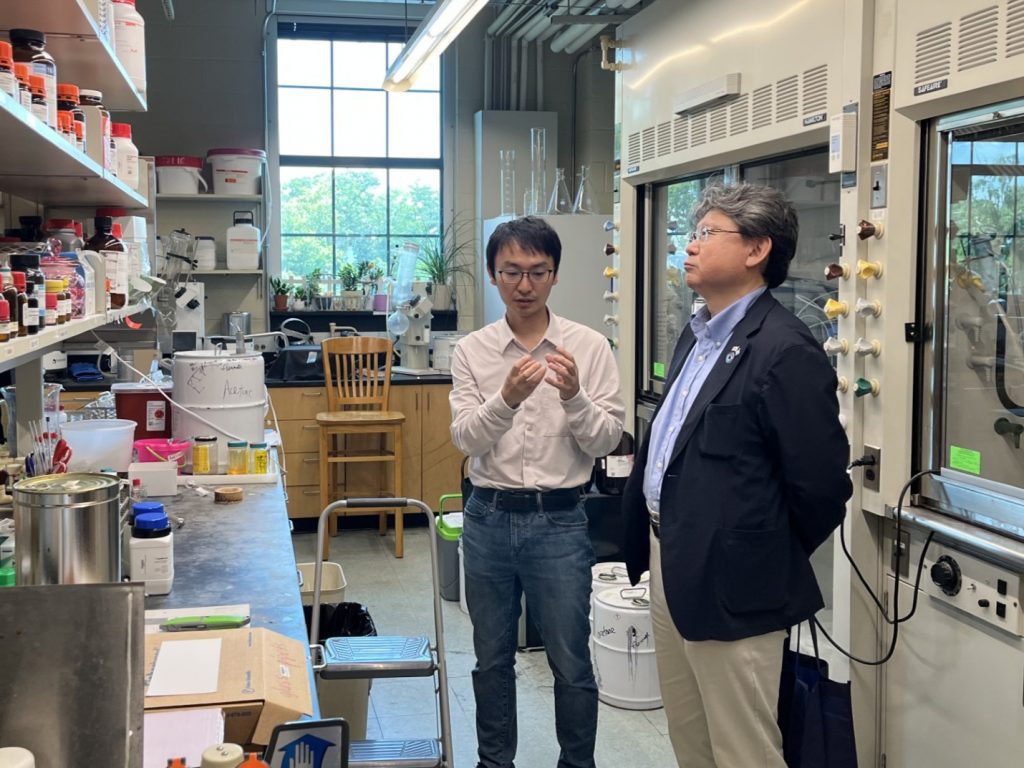
During their time on campus, the delegation toured the laboratories of Professor Tomoyasu Mani (Chemistry), Professor Kazunori Hoshino (Biomedical Engineering), and Professor Akiko Nishiyama (Physiology and Neurobiology). They also visited the Advanced Light Microscopy Facility, led by Dr. Chris O’Connell, and the Innovation Partnership Building, led by Michael DiDonato. In addition, the delegation met with Professor Mayu Inaba-Oguro and Professor Hideyuki Oguro, Cell Biology Principal Investigators at UConn Health.
The visit concluded with a productive meeting involving President Maric, Dr. Ngozi Taffe, Associate Vice President for Global Affairs, and Professor Fumiko Hoeft, Dean of UConn Waterbury and Professor of Psychological Sciences. Discussions focused on opportunities to deepen UConn’s longstanding relationship with Japan and expand future areas of collaboration.
The engagement was facilitated by Dr. Allison Casaly, Global Partnerships Manager. The discussions reinforced shared priorities and helped lay the foundation for continued partnership between UConn and institutions and organizations across Japan.
Through the U.S. Mission in India, entrepreneurs are equipped with training, mentorship and opportunities for U.S. collaboration.
The Office of Global Affairs’ Global Training and Development Institute (GTDI) leads UConn’s efforts in global entrepreneurship and cross-border collaboration, strengthening UConn’s position as a place where international innovators can learn, connect, and build long-term partnerships. A flagship initiative of the U.S. Mission in India, the Nexus Entrepreneur Empowerment Program is administered through the American Center in New Delhi and implemented by UConn Global Affairs/GTDI and provides high-potential Indian startups with intensive training, mentorship, and pathways to engage with the U.S. innovation ecosystem. A unique component of the program is the opportunity for each cohort’s top startup to visit UConn for a week to explore the university’s entrepreneurial assets and connect with Connecticut’s innovation community.
For UConn Global Affairs, hosting Nexus awardees aligns directly with the University’s mission to expand global impact through research, entrepreneurship, and international partnerships. These visits create opportunities for shared learning between faculty, research centers, and emerging founders. As Tolga Turker, Director of Global Entrepreneurial Programs, notes, programs like Nexus “position UConn as a hub where international founders can connect with researchers, explore new technologies, and spark collaborations that can grow into meaningful global innovation pipelines.”
This fall, Shiftzzy, founded in 2023 by Adarsh Kakarania and Tanya Wadhwa, traveled to UConn as the winner of the Nexus 20th Cohort. What began as a small effort to guide students seeking full degree programs overseas, has grown into a full platform designed to make global education more accessible. Shiftzzy supports learners through university exploration, application guidance, and transition preparedness, with the broader goal of simplifying complex steps for students pursuing opportunities abroad. Their long-term vision is to partner with U.S. universities operating in India and strengthen pathways for future international students.
The 21st Cohort winner, Sevenky Tech, incorporated in 2022 by Venkat Bokka and Sailaja Sowmya, brought a complementary technical focus. Sevenky develops modern digital engineering solutions across computing, networking, automation, sensors, and AI, delivering reliable and scalable systems for a range of industries. Their visual identity reflects this multidisciplinary approach—a butterfly-shaped cluster of coloured circles, each representing a core engineering domain. Looking ahead, Sevenky aims to expand its technology footprint across India and the United States by taking on larger, high-impact projects.
The weeklong schedule was intentionally designed to align with the strengths and goals of both companies. For Shiftzzy, whose work centers on student pathways and global education access, sessions with UConn Global Affairs, the Graduate School, Enrollment Management, and the Center for International Student & Scholar Services offered meaningful insight into how large universities support international learners, from admissions pipelines to student services. These engagements directly connected to Shiftzzy’s long-term vision of partnering with U.S. universities operating in India.
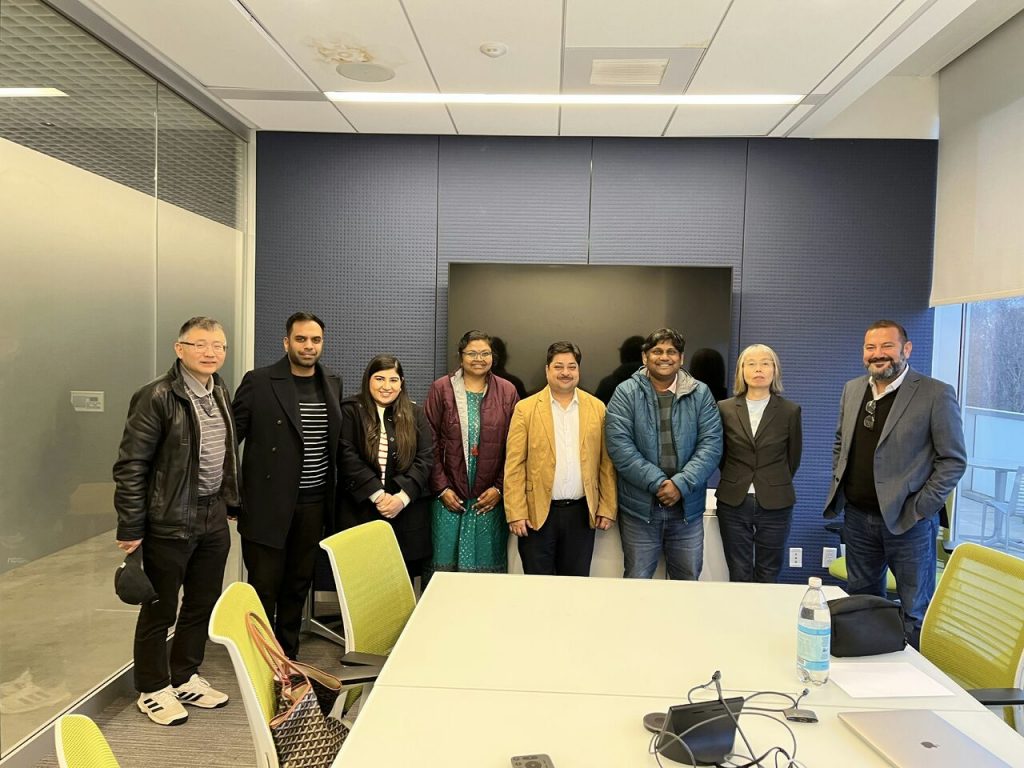
Founders of Sevenky, Tanya Wadhwa and Adarsh Kakarania, and founders of Shiftzzy, Venkat Bokka and Sree Sailaja Sowmya Katta, meeting with Dr. Sanjeev Nayak and Uconn Engineering faculty exploring quantum technology collaboration opportunities.
For Sevenky Tech, a company grounded in computing, automation, sensors, AI, and engineering systems, the technical components of the itinerary provided high-value exposure. During their visit to the UConn Tech Park, the founders connected with researchers developing smart sensors that help preserve clean water supplies. They also traveled to the Connecticut Center for Advanced Technology’s Digital Transformation Lab, the Technology Incubation Program, and attended meetings related to Quantum CT initiatives which gave them a practical look at how research, advanced engineering, and commercialization come together in Connecticut’s innovation ecosystem. These sessions offered them a deeper understanding of emerging technologies and opportunities for future collaboration in the U.S. tech landscape. When asked about their future plans, the Shiftzzy founders shared that “their goal is not only to support more students pursuing education abroad but also to welcome U.S. universities looking to expand their presence in India”. Meanwhile, the founders of Sevenky Tech expressed their ambition to “broaden [their] reach across the United States and take on a wider range of high-impact technology projects.”
Visits like this illustrate how UConn and the Nexus Startup Hub in India are building bridges between ideas and impact. By fostering these connections, UConn strengthens its role as a global hub for entrepreneurship and links emerging founders with research, technology, and mentorship to spark innovation across borders.

![Touring of a lab with Hideo Takahashi (Vice Consul, Economic Affairs), [student 1], Consul General Seiichiro Takahashi, [student 2], Yurie Karikomi (Consulate, Researcher, Science and Technology).](https://draft-global.media.uconn.edu/wp-content/uploads/sites/4147/2026/07/Hoshino-lab-3-1024x770.jpeg)